
Brazil to establish mandate on biomethane certificates
New standard fills emissions mitigation gap
The I-TRACK Foundation has launched certification standards for biogas and biomethane in partnership with the Global Gas Tracking, enabling issuance, transfer and redemption of certificates for these gases, following increased demand for biomethane in Brazil and Asia.
The so-called I-TRACK(G) Code was developed through a collaboration between registry companies Evident Group and Totum Institute, following a public consultation, tests and implementation in Brazil.
Natural gas consumption is an important component of Scope 1 and 2 carbon emissions, with companies having few alternatives to mitigate them. The new certification, launched in May 2026, aims to fill this gap.
“We believe the standard can help accelerate access to finance for projects and drive real-world deployment of renewable gas solutions,” said Travis Caddy, director at Evident.
Currently, the I-TRACK Foundation manages standards for several renewable products, including International Renewable Energy Certificates, hydrogen and carbon dioxide removal. The new gas framework is interoperable with I-REC and I-TRACK(HX) for hydrogen, facilitating management across sectors and reducing duplication risks, I-TRACK said.
“With demand for renewable gas accelerating in Asia Pacific, initiatives like this will play a key role in supporting scalable market growth,” said John Davis, managing director for the Asia Pacific region at ACT Group, a company that provides environmental consultancy and plans to be an early adopter of the certificates.
Outside Brazil, the certificates are managed by Evident on its new I-TRACK(G) registry. Within Brazil, the Totum Institute will continue to administer the code through its GAS-REC registry.
Regulated demand
The launch is also part of the Totum Institute’s efforts to standardize its gas certifications ahead of new mandatory requirements in Brazil, expected to take effect in 2026.
“The standard has been designed to be compatible with CGOB, Brazil’s new federally regulated biomethane certificate of origin program,” said Fernando Giachini Lopes, CEO of Totum.
Brazil is preparing to adopt mandatory requirements of biomethane certificates this year, as the country struggles to decarbonize its fuel sector. Natural gas producers and importers in the country will be required to buy guarantees of origin of biomethane when the program is fully implemented.
The national oil agency, ANP, will oversee the certificates, called CGOB, and producers and importers will initially be required to certify 0.5% of their volumes annually starting in 2026.
In response to this regulation, the Totum Institute, which issues I-RECs and Gas-RECs in Brazil, has obtained the certification to issue the mandatory CGOB certificates. The regulation allows other companies to issue CGOB certificates once they are certified by ANP.
Brazil has the capacity to produce 840,000 cubic meters of biomethane, according to the national biogas and biomethane association, Abiogás.
Fonte: S&P Global
 GGT ingressa na World Biogas Association para liderar regras globais de certificação de biometano
  GGT passa a integrar associação global de biogás e amplia participação brasileira nas discussões sobre certificação de gases renováveis
 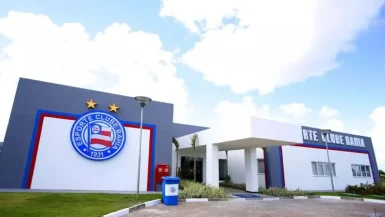 CT do Bahia, em Dias d’Ávila, recebe certificação internacional por uso de energia renovável